 Meta
 GoogleAvailable
API
Gemini API File Processing and Slicing
Developers can pass Microsoft Office and OpenDocument files directly to the Gemini API and slice documents, videos, and audio by specific ranges.
Loading launches from 4 labs
Topic
Systems that plan and take multi-step actions with tools
GoogleAvailableDevelopers can pass Microsoft Office and OpenDocument files directly to the Gemini API and slice documents, videos, and audio by specific ranges.
 GoogleAvailable
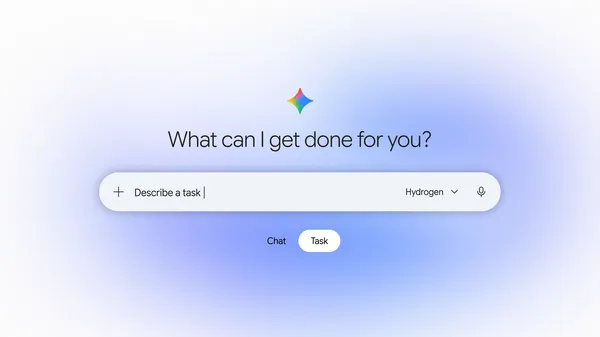
Gemini can now handle complex tasks like scheduling appointments, analyzing bills, and shopping by connecting to your Google apps and payment methods.
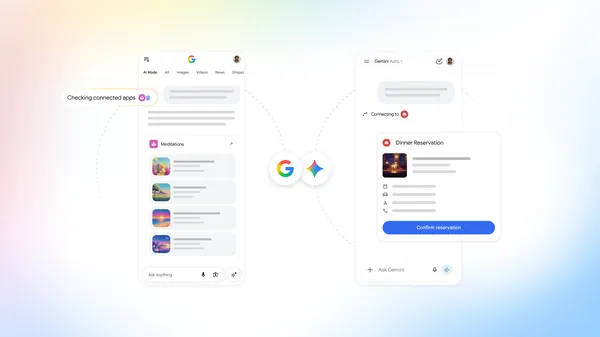
GooglePreviewDevelopers can now apply to join the Connected Apps Platform, which connects Gemini with over 60 popular applications.
GoogleAvailableGoogle added voice-driven editing, rewriting, and formatting to gemini-3.5-transcribe and gemini-3.5-transcribe-live, letting users modify dictated speech or existing text by voice.
GoogleAvailableGemini can now place phone calls to US businesses on your behalf to check inventory, compare quotes, or handle scheduling.
GoogleAvailableUS users can now text Gemini via Google Messages or iMessage to manage tasks, send photos, and steer multi-step runs on the go.
 GoogleAvailable
New agentic capabilities allow Ask Maps to find open slots and call local businesses for appointments like beauty, pet care, and home repair.
 GoogleAvailable
Google introduced the Gemini Decisions API powered by the Gemini Decision 1 model, enabling developers to evaluate up to 1,000 yes/no, choice, and rubric-scoring questions in a single multimodal pass.
 GooglePreview
Google announced Gemini 4 Carbon, its strongest frontier model with advanced cybersecurity and long-horizon capabilities, priced at $2 per million input tokens and $10 per million output tokens.
 GooglePreview
Google's Connected Apps Platform lets developers build and manage apps for Search and the Gemini app using a cloud-hosted MCP server or Android MCP.
GoogleBetaGoogle released gemini-api, a stateless, zero-dependency command-line client for the Gemini API. It lets scripts, CI pipelines, and coding agents call Gemini without SDK setup.
GoogleAvailableNew paid-tier Google Gemini API projects now store Generate Content API requests by default. Developers who do not want requests logged must opt out per request or in the dashboard.