
Tool Retrieval in the Gemini API
Gemini's Interactions API now supports on-demand loading of tool parameter schemas. Agents with large tool libraries can keep schemas out of context until needed, cutting input tokens, latency, and selection errors.
Loading launches from 4 labs
Topic
Context windows, memory across chats, caching, long inputs

Gemini's Interactions API now supports on-demand loading of tool parameter schemas. Agents with large tool libraries can keep schemas out of context until needed, cutting input tokens, latency, and selection errors.

Google's new Gemini 4 model pairs a 1M-token context window and four thinking levels with lower cost per task. It scores 61 on the AA Intelligence Index and targets complex coding, analysis, and cyber workflows.

Google DeepMind's AlphaGenome evaluates 1 million base pair DNA sequences to make thousands of predictions, helping scientists identify disease-causing genetic changes.

Google DeepMind introduced AlphaGenome Atlas, a dataset predicting outcomes of 9 billion single-letter DNA changes to help researchers prioritize variants using an impact score.
OpenAI updated ChatGPT for Healthcare to include improved clinical answers, providing better responses for medical queries.
OpenAI introduced computer-use agents designed to work across healthcare software to handle real operational and clinical tasks.

Google added Memory Summary to Personal Intelligence in Gemini. It gives users a single place to view, edit, or remove the saved preferences, interests, and ongoing goals Gemini uses to tailor responses.
Codex 0.168.0 lets you attach audio recordings when using audio-capable models. It skips confirmed rejected clips on later turns and uses clip duration to keep more short recordings in context.

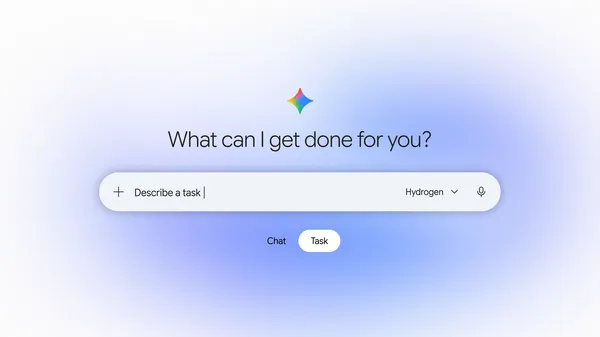
Google's new Gemini 4 Hydrogen model features a 1M-token unified context window, four thinking levels, and long decode for agentic workflows.

Google DeepMind launched AlphaGenome 2, a model that predicts how genetic variants disrupt individual cell types instead of whole tissues.

Google Cloud launched Gemini for healthcare, an AI platform that connects clinical, operational, and administrative systems to handle tasks like medical records synthesis and prior authorization review.
Anthropic launched Claude Fable 5.2 and Mythos 5.2 with 1M token context, 128k max output, and always-on adaptive thinking. Fable 5.2 for reasoning agents; Mythos 5.2 for verified orgs. Pricing: $8/MTok in, $40/MTok out.
OpenAI released BioBasicsBench, a 100-task benchmark to evaluate how well AI agents interpret raw experimental data and perform everyday wet-lab science tasks.
Google introduced Antigravity and Cheminformatics Skills for agentic cheminformatics. They are designed to speed up drug discovery workflows, search compounds, and propose novel rigidified macrocycles.
Anthropic added message threads in beta to the Messages API, storing conversation history on the server. Subsequent requests only send new messages, reducing request size and time to first token.

Google's strongest frontier reasoning model for cybersecurity, long-horizon coding, and scientific research. It leads key vulnerability and coding benchmarks with a 1M-token unified context window.
Anthropic raised the maximum request size for the Messages API and Token Counting API from 32 MB to 128 MB on the first-party Claude API, allowing larger payloads in a single call.