OpenAIAvailable
API
OpenAI adds standby mode for GPT-Live WebRTC sessions
OpenAI now supports standby configuration for GPT-Live WebRTC sessions, pausing model inference during inactivity and resuming when someone speaks.
Loading launches from 4 labs
Topic
Research results and science, beyond a product release
OpenAI now supports standby configuration for GPT-Live WebRTC sessions, pausing model inference during inactivity and resuming when someone speaks.
OpenAI released GPT-Live-1.1 on its API, updating its live voice model with better pronunciation, accent consistency, and transcription across multilingual conversations.
 GoogleAvailable
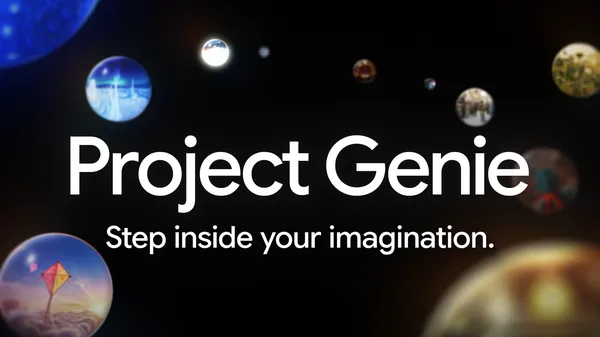
Google rolled out Genie 4 to AI Ultra subscribers, featuring real-time natural language environment editing, native adaptive audio, and interactive world generation.
Codex v0.170.0 adds WebRTC negotiation, allowing users to conduct realtime voice calls directly in the terminal user interface.
 GoogleAvailable
Google DeepMind's AlphaGenome evaluates 1 million base pair DNA sequences to make thousands of predictions, helping scientists identify disease-causing genetic changes.
GoogleAvailableGoogle DeepMind introduced AlphaGenome Atlas, a dataset predicting outcomes of 9 billion single-letter DNA changes to help researchers prioritize variants using an impact score.
 GoogleAvailable
Google is rolling out 66 regional voices on Android and iOS, adding localized accents and speech patterns to Gemini voice interactions.
Codex 0.168.0 lets you attach audio recordings when using audio-capable models. It skips confirmed rejected clips on later turns and uses clip duration to keep more short recordings in context.
 GoogleAvailable
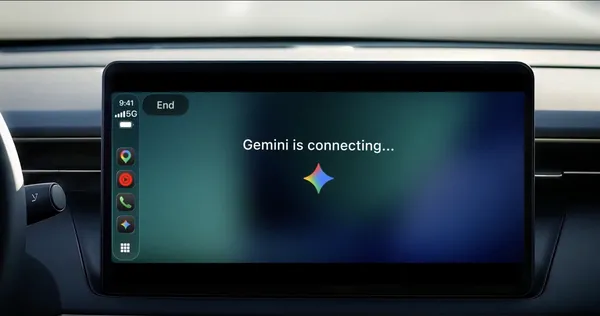
Google is bringing the Gemini app with Gemini Live to Apple CarPlay, enabling hands-free natural conversations, calendar management, and email summaries while driving.
GoogleAvailableGoogle DeepMind launched AlphaGenome 2, a model that predicts how genetic variants disrupt individual cell types instead of whole tissues.
 GooglePreview
AlphaProof Code agents generated 3 million lines of Lean proofs to formally verify Signal's core encryption protocols.
 GoogleAvailable
Gemini can now control, change, or fix device settings and storage by voice. Rolling out on Pixel 10 series and Motorola Signature 27.
OpenAI released BioBasicsBench, a 100-task benchmark to evaluate how well AI agents interpret raw experimental data and perform everyday wet-lab science tasks.
 MetaAvailable
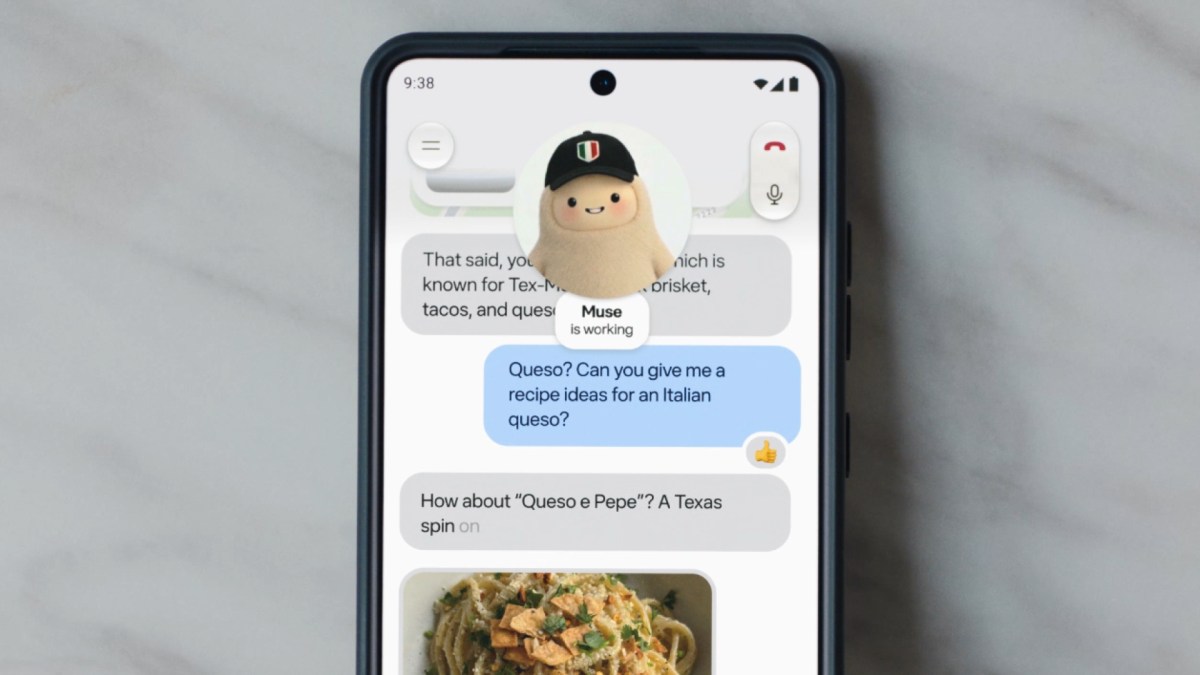
Meta rolls out real-time voice conversations and expressive avatars in the Muse app on mobile, web, and Mac, with hundreds of voice styles and real-time visual reactions. Available now in the US.
GoogleBetaGoogle released voice remixing for Gemini 3.8 TTS, allowing developers to modify existing voices using text prompts to create new stored voice IDs.
 GoogleAnnounced
Google introduced Antigravity and Cheminformatics Skills for agentic cheminformatics. They are designed to speed up drug discovery workflows, search compounds, and propose novel rigidified macrocycles.
 GoogleAvailable
Google is expanding SynthID Detector globally in English to help users verify whether images, videos, or audio clips were generated by AI.
OpenAI now supports outbound SIP calling across all organizations in the Live API, enabling GPT-Live to place calls directly to phone numbers via SIP providers.
OpenAI launched GPT-6 Rosalind, a model tailored for life sciences research that combines biological reasoning with scientific tool use.
 GooglePreview
Genie 4 is a real-time world model that generates interactive simulations with native audio and physics. It helps build safe training environments for AI agents and robots.
 MetaAvailable
Meta has launched its personal AI agent, Muse, in Australia with local app connectors, real-time voice capabilities, and custom spaces.
GoogleAvailableGoogle added voice-driven editing, rewriting, and formatting to gemini-3.5-transcribe and gemini-3.5-transcribe-live, letting users modify dictated speech or existing text by voice.
 MetaAvailable
Meta is rolling out real-time voice conversations for Muse in Canada on mobile, web, and Mac. Users can talk through ideas out loud instead of typing prompts.
GoogleAvailableGoogle rolls out Gemini Intelligence to motorola signature 27 (U.S. pre-order Nov 19) and Pixel 10 series via Pixel Drop, adding Rambler voice-to-text and task automation in UK, India, Japan.
 GoogleAvailable
Google and Artificial Analysis released MKA, a benchmark evaluating how AI agents perform multi-step, visually complex tasks across 10 professional verticals.