 Meta

 GoogleAvailable
Model
Gemini 4 Neon
Google's new Gemini 4 model pairs a 1M-token context window and four thinking levels with lower cost per task. It scores 61 on the AA Intelligence Index and targets complex coding, analysis, and cyber workflows.
Loading launches from 4 labs
GoogleAvailableGoogle's new Gemini 4 model pairs a 1M-token context window and four thinking levels with lower cost per task. It scores 61 on the AA Intelligence Index and targets complex coding, analysis, and cyber workflows.
 GoogleAvailable
Google has updated the Genie 3 world model with 3-minute sessions, world chaining, 360-degree panorama grounding, and real-time promptable events.
GoogleAvailableGoogle rolled out Genie 4 to AI Ultra subscribers, featuring real-time natural language environment editing, native adaptive audio, and interactive world generation.
GoogleAvailableDevelopers can pass Microsoft Office and OpenDocument files directly to the Gemini API and slice documents, videos, and audio by specific ranges.
OpenAI introduced GPT-6 Astra, which optimized circuits used in Jalapeño silicon and improved RISC-V core designs.
OpenAI released GPT-6.2 Astra for complex reasoning and GPT-6.2 Sol for everyday coding, both supporting the Responses and Chat Completions APIs.

An efficient and versatile model for everyday work and multistep agentic workflows, available now in ChatGPT Work, Codex, and the API.
OpenAI expanded its ChatGPT for Academic Researchers program to give 200,000 researchers worldwide free access to its frontier models.
OpenAI released the omni-moderation-csam-latest model to let approved organizations detect and prioritize potential CSAM and AI-generated CSAM images at no cost.
Codex 0.169.0 introduces an opt-in Cloud connection to the terminal on macOS and Linux. Users can send images, select models and reasoning effort, and archive or restore Cloud conversations directly from the terminal.
 GoogleAvailable
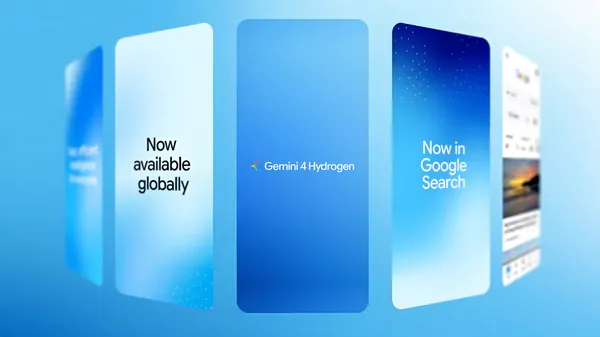
Google has integrated its Gemini 4 Hydrogen model into Google Search globally, improving intent understanding, query fan-out for better web linking, visual responses, and multilingual support.
Anthropic's new default model for Pro, Max, Ultra, and Team plans, built for daily knowledge work like research, analysis, and finished files. It matches Opus 5's high-effort performance at its default Medium effort.
 GoogleAvailable
Google introduced the Gemini Decisions API powered by the Gemini Decision 1 model, enabling developers to evaluate up to 1,000 yes/no, choice, and rubric-scoring questions in a single multimodal pass.
 GoogleOn request
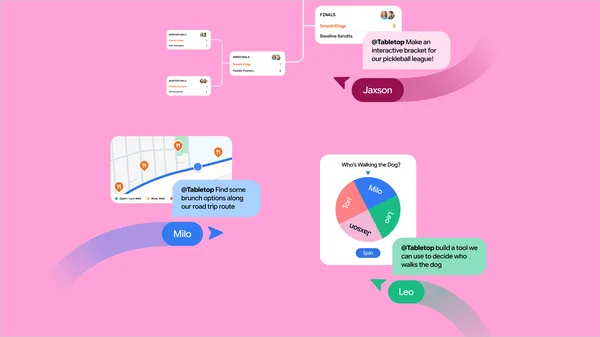
Tabletop is a Google Labs experiment for real-time group collaboration, allowing users to generate custom interactive itineraries, polls, and tools using AI prompts.
 GooglePreview
Google announced Gemini 4 Carbon, its strongest frontier model with advanced cybersecurity and long-horizon capabilities, priced at $2 per million input tokens and $10 per million output tokens.
 GoogleAvailable
Google launched visual, interactive explorations in the Gemini app for studying complex science and history topics layer-by-layer.
 GoogleAnnounced
Google introduced Genie 4, a new world model focused on realism in real-time simulation. Specifics on access, benchmarks, and capabilities were not detailed in the snippet.
 GoogleAvailable
Google announced Gemini 4 Argon, a new AI model featuring advanced reasoning, coding, and multimodal performance for complex long-horizon workflows.
OpenAI released GPT-6.1 Terra, a fast, efficient model built for visual reasoning, computer use, and natural writing. It is available through the OpenAI API.
OpenAI's GPT-6.2 Astra is a frontier model built for professional work and scientific research, available in ChatGPT Work, Codex, and the API.
Anthropic now applies a text watermark to content generated by Claude 4.5 and 4.6 models on supported platforms when using default sampling parameters.
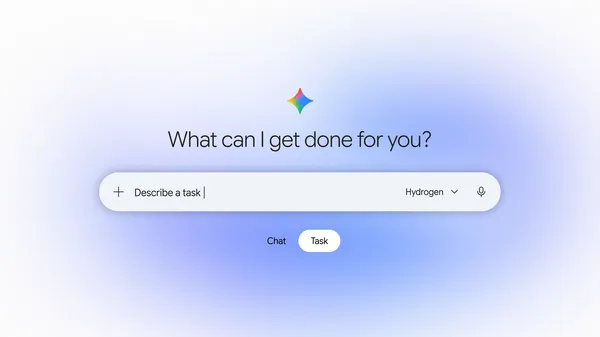 GoogleAvailable
Google's new Gemini 4 Hydrogen model features a 1M-token unified context window, four thinking levels, and long decode for agentic workflows.
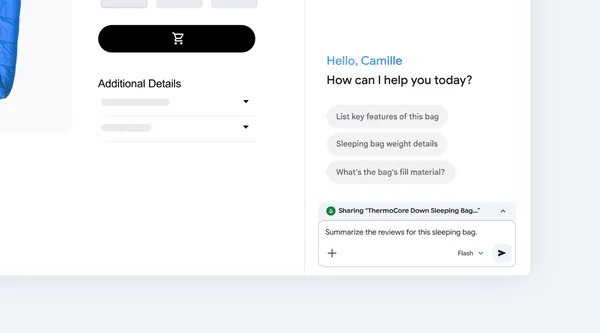 GoogleAvailable
Google added Gemini to the Chrome side panel so users can get quick answers on any website. It summarizes articles, compares products, and explains complex topics directly in the browser.
 GoogleAvailable
Google DeepMind launched AlphaGenome 2, a model that predicts how genetic variants disrupt individual cell types instead of whole tissues.